admin
admin SpaceX spent $131 million buying around 1,600 Tesla Cybertrucks at full manufacturer’s suggested retail price (MSRP) in 2025, according to the S-1 IPO registration document filed by SpaceX recently. The bulk purchase accounts for roughly 8% of Cybertruck’s total US annual sales in 2025, making SpaceX one of the biggest single buyers of this futuristic electric pickup truck. The full-price deal between two companies controlled by Elon Musk breaks the common industry practice of bulk purchase discounts and triggers heated discussions over Cybertruck’s sluggish retail performance and the inner business logic of Musk’s corporate ecosystem.
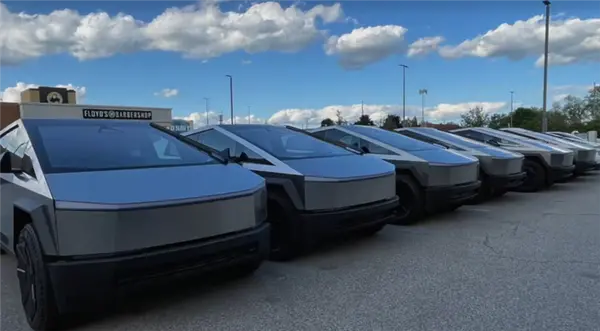
Calculated by total deal value, one out of every twelve Cybertrucks sold across the US in 2025 was delivered to SpaceX. In the conventional auto industry, large fleet purchases usually qualify for discounts ranging from 5% to 15%. Given the shared controller Elon Musk, the market widely expected SpaceX to receive substantial price cuts. However, official financial documents confirm no preferential pricing was granted, and every vehicle was billed at MSRP, which becomes the most controversial detail of the transaction.
From practical application perspective, SpaceX has genuine operational needs for such a big vehicle fleet. SpaceX’s rocket launch sites, testing bases and satellite manufacturing parks in Texas require large quantities of service vehicles for site patrol, security inspection and material transportation. With scratch-resistant stainless steel body, all-electric powertrain and powerful external power supply function, Cybertruck outperforms traditional gasoline pickups under harsh aerospace field conditions. On-site photos have captured dozens of Cybertrucks parked at SpaceX’s Texas campuses, gradually replacing aging gasoline fleets for daily on-site operations.
Still, robust internal procurement cannot hide Cybertruck’s poor retail sales in the open market. Data from Cox Automotive shows Cybertruck’s US full-year sales hit only 22,037 units in 2025, dropping 48.1% year-on-year and falling far short of Elon Musk’s early annual production target of 250,000 units. Its Q1 2026 deliveries slumped from 12,991 units in Q4 2025 down to 6,406 units, a sharp quarter-on-quarter halving. To clear mounting inventory, Tesla rolled out large-scale price promotions for regular customers with thousands of US dollars off per vehicle, creating a stark pricing contrast with SpaceX’s full-cost purchase.
The split market opinions emerge amid contradictory pricing and sales data. Optimists regard the deal as sound industrial synergy inside Musk’s business empire; full-price payment strictly complies with US securities regulations on related-party transactions to avoid illegal benefit transfer, and all financial details in S-1 IPO filings are audited by independent third parties. Skeptics argue the large full-price internal purchase is essentially an internal sales trick to inflate Cybertruck’s sales figures and cover weak civilian market demand, as Tesla slashes prices for ordinary buyers to clear unsold stock.
The S-1 document also unveils long-term deep cooperation between SpaceX and Tesla on energy storage: SpaceX’s subsidiary xAI purchased $191 million and $506 million worth of Tesla Megapack energy storage products in 2024 and 2025 respectively to power AI data centers, with total two-year procurement exceeding $697 million. Combined with Cybertruck’s $131-million purchase, related-party orders of auto and energy storage exceed $830 million, serving as a steady revenue buffer for Tesla and reflecting tight cross-industry integration among Musk’s aerospace, AI and new-energy businesses. As SpaceX moves forward with its IPO plan, follow-up related transactions and future Cybertruck procurement plans will stay under close watch from global capital markets and automotive analysts.