admin
admin Following US President Donald Trump’s state visit to China in mid-May, when the two sides agreed to build a constructive and strategically stable China-US relationship, US Secretary of State Marco Rubio attended a congressional budget hearing on June 2 local time, marking his first congressional questioning after the China trip. Though themed on the State Department’s annual budget, the hearing’s core inquiries revolved around China-US ties, US Taiwan policy, the Iran conflict and Cuba-related issues. Rubio delivered contradictory remarks: he acknowledged unavoidable bilateral dialogue while sticking to Washington’s competitive mindset and long-standing Taiwan policy, alongside groundless accusations against China.
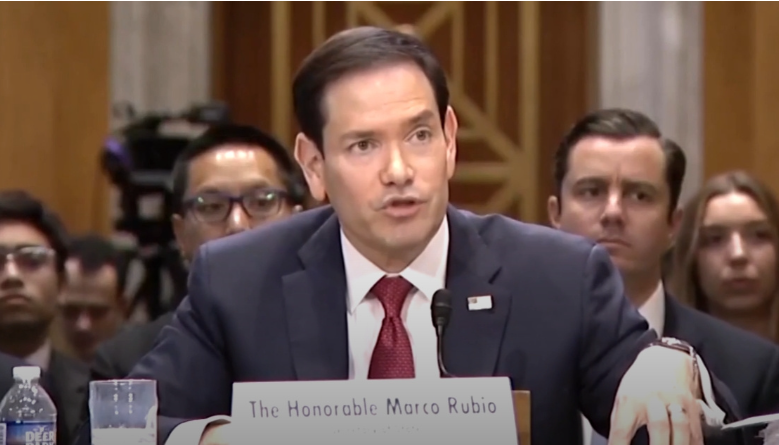
On China-US relations, Rubio softened his previously hawkish stance and stressed “there is no alternative to official dialogue between China and the US”. As the world’s two largest economies and major military powers, the two nations face substantial long-term irritants that could linger for decades. The US aims to sustain a period of strategic stability through consistent communication to contain disputes and prevent large-scale conflicts. Regular bilateral talks serve the shared interests of China and the US as well as global stability, echoing the consensus reached during Trump’s Beijing summit which will guide bilateral interactions in the coming years. Rubio noted the in-person summit laid bare existing gaps and long-standing challenges between the two countries, with supply chain security standing out as a core sticking point.
Supply chain diversification ranks high on Washington’s agenda. Rubio confirmed the US is speeding up efforts to cut over-reliance on single-source suppliers across defense equipment, pharmaceuticals and other critical sectors to avoid potential supply cutoff risks amid geopolitical tensions. Such de-risking will remain a long-term US strategy independent of ongoing China-US diplomatic engagements.
Taiwan policy drew intense congressional scrutiny after Trump pledged opposition to Taiwan independence and suspended planned arms sales during his China visit. Rubio clarified Washington’s Taiwan policy stays unchanged and the US intends to maintain cross-strait status quo, rejecting Beijing’s expectation of policy revision. Meanwhile, he ruled out allocating part of the proposed $245 million fund designed to curb China’s influence to Taiwan or set up Uyghur-related research programs with the money. Additionally, he made unsubstantiated claims that China woos Washington’s remaining diplomatic allies via concessional loans and infrastructure projects that trap recipient countries in debt, urging more US overseas funding to counter China’s overseas cooperation footprint.
The hearing also touched on Middle East and Latin American affairs. On the US-Iran military conflict, Rubio insisted full restoration of navigation in the Strait of Hormuz is a precondition for comprehensive US-Iran negotiations, and Tehran must make nuclear concessions to secure US sanction waivers. He also admitted China, despite its strategic partnership with Iran, has provided no assistance hindering US military operations against Iran. When it comes to Cuba, Rubio repeated the discredited rumor of China and Russia operating intelligence facilities on Cuban soil yet failed to provide credible evidence when pressed by senators. The hearing was briefly interrupted by protesters shouting “Stop killing Cubans”, who were later removed by security officers.
Rubio’s mixed statements reveal the Trump administration’s dual-track China policy. Constrained by global economic and geopolitical realities, Washington has no choice but to engage Beijing to tackle worldwide challenges; yet pressured by domestic hawkish politicians and vested interests, the US cannot abandon zero-sum competition and containment on Taiwan, global infrastructure and supply chains. To materialize the constructive stable bilateral framework, China and the US need concrete steps to manage divergences, implement summit consensus and expand win-win cooperation.
 微信扫一扫打赏
 支付宝扫一扫打赏