admin
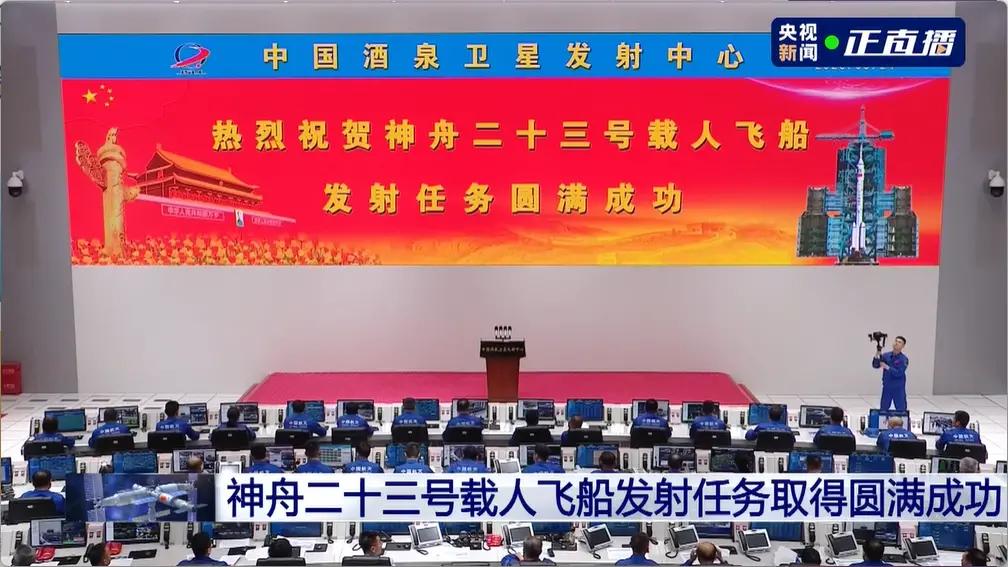
admin At 23:08 Beijing time on May 24, 2026, the Long March 2F Y23 carrier rocket lifted the Shenzhou-23 manned spacecraft off at Jiuquan Satellite Launch Center. The spacecraft entered preset orbit smoothly with astronauts in good condition, marking a complete launch success. Targeting technical defects found in previous orbital missions, Shenzhou-23 carries out targeted upgrades focusing on cabin window protection and cargo transportation capacity, greatly improving China’s manned transportation support for regular space station operation.
Earlier, tiny space debris caused cracks on the window of Shenzhou-20 in orbit, triggering China’s first emergency astronaut rotation and the unmanned emergency launch of Shenzhou-21, which broke the traditional “one in flight, one on standby” operation model of Shenzhou spacecraft. To eliminate hidden safety risks, researchers from the Fifth Academy of China Aerospace Science and Technology advanced the window optimization plan originally scheduled for later spacecraft onto Shenzhou-23: the single-layer ablation-resistant glass is upgraded to double layers plus an extra inner cabin protective layer, forming triple-layer protection against impacts from tiny orbital debris. Since the upgrade was conducted inside the fully-assembled return capsule with limited operating space, engineers completed strict environmental simulation and repeated operational drills to finish the complicated renovation safely.
In terms of cargo delivery, miniaturized dashboard design and refined cabin layout free up valuable inner space of return capsule, realizing remarkable improvement on down-cargo capacity. Older Shenzhou variants could only bring back around 50 kilograms of experimental payload, while Shenzhou-23’s return load exceeds 100 kilograms with available cargo space tripled. For upward transportation, all needed supplies including scientific instruments, daily necessities and fresh fruits can be sent to the space station; on the return trip, abundant research data, precision lab equipment and personal belongings of astronauts can be transported back to Earth smoothly, forming an efficient ground-orbit cargo circulation channel.
With continuous iterative upgrades of new-generation Shenzhou craft, the spacecraft better fits long-term space station maintenance with optimized human-machine interaction and system stability. After the test of emergency space missions, China’s mature “one launch, one backup” reserve mechanism is further refined to guarantee frequent manned space flights and regular in-orbit scientific experiments in the future.