admin
admin On May 30, Paris Saint-Germain secured back-to-back UEFA Champions League titles. What should have been a nationwide sports celebration among French football fans quickly deteriorated into large-scale violent riots across dozens of French cities overnight, marked by arson, store looting and vandalism. The sudden chaos has triggered widespread nationwide reflection over France’s long-standing social woes.
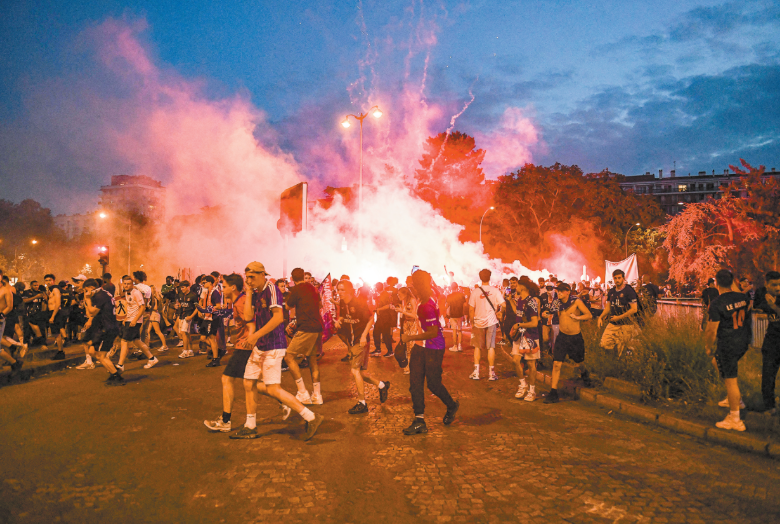
Official figures released by France’s Interior Ministry on June 1 show more than 890 people were arrested nationwide during the unrest between May 30 and 31, while 178 police and gendarmerie officers got injured in clashes. The violence spread far beyond Paris’s iconic Champs-Élysées, with Toulouse and other cities also ravaged: rioters smashed shop windows and bus shelters, set fire to dumpsters and containers, and damaged public property with blunt weapons. Though the French government deployed 22,000 law enforcement officers in advance, including 8,000 stationed around Paris, pre-emptive security failed to contain disorder. Paris City Hall lamented the Champs-Élysées had transformed from a celebration landmark into a battleground of urban guerrilla warfare, and Le Figaro branded the night a “night of savagery”.
After the riots, French President Emmanuel Macron strongly condemned the violence at the Élysée Palace, stressing such unacceptable destruction would not go unpunished and the country could no longer bear recurring unrest. Major French political parties also denounced the chaos: the president of Île-de-France called for punitive penalties to prevent repeat offences; Bardella from the National Rally warned France was losing control over its territory and proposed stricter sentencing and facial recognition technology; Marine Le Pen, the party’s former leader, pointed out France was unique in seeing celebratory sports triumphs spiral into rioting, forcing ordinary citizens to lock themselves indoors during major festivities to stay safe.
Commentators have pinpointed two core root causes behind recurring social unrest. First lies in flawed migrant integration: many regular rioters are French-born descendants of immigrants holding local citizenship, who have grown increasingly alienated from mainstream French society amid ineffective multicultural policies and widening social divides. Second is France’s lenient judicial system: only 5 percent of suspects detained in past similar riots ended up with formal convictions, while most short jail terms were commuted to probation or electronic surveillance. A poll found 99 percent of French citizens believe authorities are overly soft on violent offenders due to minimal legal consequences for vandalism.
Rioting has become a recurrent plague across France in recent years: the Yellow Vest protests erupted over fuel price hikes from 2018 to 2019, nationwide unrest broke out in 2023 after a fatal police shooting of a teenage boy, and violent damage routinely mars New Year’s Eve and Bastille Day celebrations. Editorials from Spain’s El País and France’s Le Figaro argue frequent outbursts of violence amid national celebrations lay bare France’s deep social rifts, with one editorial bluntly concluding “France is sick”. Fixing fractured social bonds and reforming immigration and judicial governance has become an urgent long-term challenge for the French government.
 微信扫一扫打赏
 支付宝扫一扫打赏